It is the rare person who has not heard of the Alex Pretti shooting in Minnesota this last Saturday. Anyone without an opinion on the shooting is even more rare. Yet what do any of us really know about it?
The shooting has fueled greater division in a nation already divided over multiple issues. On this issue, like all the others, most people know very little about it.
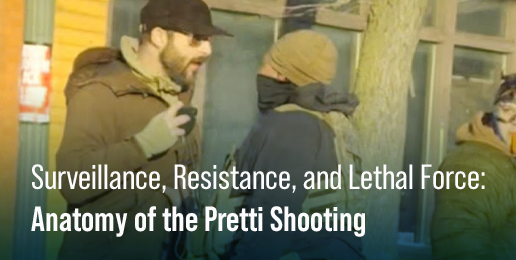
These are the facts as I know them. On a freezing-cold Saturday morning, January 24, 2026, amid a federal immigration crackdown and mass protests in Minneapolis, officers of BORTAC—Border Patrol’s elite tactical unit—fatally shot 37-year-old ICU nurse Alex Pretti on Nicollet Avenue near 26th Street, called Eat Street by locals, in south Minneapolis.
The incident appears to have been caused by the convergence of three circumstances: aggressive federal immigration enforcement, highly organized protesters using a sophisticated intelligence network to track federal agents in real time, and the failure—actually a refusal—by local authorities to maintain effective crowd control.
While civilian videos conflict with some of the initial federal narrative and the body-camera footage remains unreleased, the law and fairness demand that we evaluate the officers’ actions in light of all the circumstances. It was a rapidly unfolding, highly charged, and hazardous environment.
Alex Pretti was a U.S. citizen and a lawful holder of a Minnesota concealed-carry permit who spent about five years working as an ICU nurse at the Minneapolis VA Medical Center, caring for veterans with severe illnesses, including cancer. Colleagues and neighbors described him as kind and community-oriented. His parents portrayed him as someone who “lived to help” and who joined the protests only after the earlier fatal shooting of Renee Good by federal agents.
On the morning of January 24th, federal authorities were conducting an immigration enforcement action at 26th Street and Nicollet Avenue as part of “Operation Metro Surge,” a surge deployment of roughly 3,000 Immigration and Customs Enforcement (ICE) and Border Patrol personnel to the Twin Cities—about five times the size of the Minneapolis Police Department’s roughly 600-officer force.
The agents directly involved were not line Border Patrol officers but members of BORTAC, the Border Patrol Tactical Unit—an elite special operations unit trained in high-risk tactical law enforcement, counterterrorism, hostage rescue, and crowd/riot control.
BORTAC selection mirrors the Army Special Forces evaluation process. Those selected to become operators receive advanced training in small-unit tactics, close-quarters combat, defensive tactics, and handling violent or chaotic situations—including deployments to events such as the 1992 Los Angeles unrest and the 2020 Portland protests.
They are intensively trained and highly skilled.
Department of Homeland Security (DHS) has confirmed that the BORTAC agents on scene were wearing body cameras and that the shooting was captured from multiple angles, but the footage has not been publicly released. That unreleased video will be vital evidence to determine precisely what happened and what each agent reasonably might have perceived during the encounter.
By the time of the shooting, protests against ICE and Border Patrol in Minnesota were supported by a highly organized network of protesters. This network significantly shaped the circumstances BORTAC and other agents faced.
Community volunteers in St. Paul and Minneapolis used encrypted messaging systems—especially Signal—to build a rapid-response “dispatch” system that tracked immigration agents in near real time. Participants shared tips on how to flag suspected ICE or Border Patrol vehicles as they moved through neighborhoods.
According to reports attributed to the FBI, some Signal groups maintained logs of license plates associated with federal agents.
These groups served as dispatch centers that could quickly mobilize observers and protesters, directing them to locations where federal operations appeared to be in progress.
The protests were not spontaneous. Investigators and some media described them as well-organized, raising significant concerns. At the same time, many local officials and civil rights advocates characterized these groups as nonviolent and legal.
Some of their actions were clearly legal. There is no prohibition against documenting federal actions or shining a light on ICE operations. However, warning immigrant communities about planned raids, harassing agents carrying out law enforcement activities, or impeding their movements, these are not.
Reports also indicate that some activists allegedly used more advanced surveillance methods, including Automated License Plate Readers (ALPRs), to help identify and track federal agents. The Twin Cities region has a dense network—over 300 cameras—of ALPR systems powered by AI that capture and search vehicle plates in real time. Reportedly, leaked chats revealed that activists, sometimes by persuading sympathetic local officers, were accessing the ALPR system.
Allegedly, license plates recorded by spotters as being used by ICE or Border Patrol were entered into the system, and automated alerts were generated when those vehicles were spotted passing specific cameras.
Flock Safety, the outside contractor for the ALPR system, publicly stated that only authorized law enforcement users can access the system. However, the mere possibility that sympathetic insiders were using the system for protest purposes drew criticism from both law enforcement and some privacy advocates.
Beyond street-level tracking, the protests appear to have evolved into an information-centered campaign that federal officials label “hacktivism.” A cache of personal information on roughly 4,500 ICE, Border Patrol, and DHS personnel was leaked to a website known as “ICE List,” reportedly by a DHS insider. The leaked data included the names and identifying details of some 2,000 frontline enforcement officers and was the most significant known breach of its kind involving DHS personnel.
Supporters framed the leak as political dissent intended to expose and deter aggressive enforcement operations. The Trump Administration, DHS leaders, and members of Congress condemned it as dangerous doxxing, noting that these activities coincided with steep increases in threats and assaults against agents. DHS officials threatened legal action against those responsible and backed legislation to protect agents’ identities.
The protest movement in Minneapolis has been both organized and decentralized. Early protests grew and were coordinated through Facebook groups and Signal chats, where information about ICE vehicles and locations was shared. There was no apparent centralized leadership directing the activities or tactics used.
Unlike the large, centrally coordinated national mobilizations of 2025, the anti-ICE protests in Minnesota in early 2026 were primarily driven by local grassroots networks of longtime organizers and local residents.
Minnesota officials and immigrant-rights organizations repeatedly urged demonstrators to remain peaceful, record federal agents, and avoid physically intervening in arrests. Yet as USA Today and protest observers noted, decentralized movements often cannot entirely prevent isolated acts of violence or confrontational tactics, especially when anger runs high, some participants adopt more aggressive methods, and protesters and federal agents perceive each other as escalating the stakes.
This was the environment into which BORTAC was inserted: a city where federal agents were not only constantly monitored by crowds reporting on operations via cellphones, but also possibly tracked through the use of license-plate readers and had their personal information exposed online through doxxing campaigns.
The sophisticated communications used by the protesters did more than facilitate lawful observation. From the perspective of federal officers on the ground—especially elite units like BORTAC—it created conditions in which they could reasonably feel hunted, surveilled, and targeted, not merely protested.
Agents knew they were being tracked via encrypted Signal networks that relayed their locations to “rapid responders,” who could converge quickly to form a flash mob.
Some officers were aware that personal details of ICE and Border Patrol personnel had been leaked online and that threats and assaults had surged.
Reports that ALPR data was being used to monitor movement of federal vehicles—and that activists were building license-plate databases—reinforced the sense that agents were operating in a hostile environment.
Add to this the physical reality of large, angry crowds fully surrounding a small group of federal officers, blowing whistles at ear-splitting volumes, shouting at close range, and at times throwing objects and blocking vehicles. It is known that high-decibel noise, including whistles and air horns, can cause disorientation, stress, and impaired decision-making in both crowds and officers.
Collectively, these conditions are essential considerations in evaluating the lethal use of force under Graham v. Connor. This U.S. Supreme Court decision establishes the framework for determining whether the use of force is reasonable. The evaluation must be from the perspective of a reasonable officer on the scene, in light of the facts and circumstances confronting that officer, not with the 20/20 vision of hindsight of an outside observer.
A BORTAC operator responding to a chaotic struggle over an armed subject, while surrounded by a large, organized, angry, hostile crowd, where hearing and movement are obstructed, may reasonably perceive a much higher level of risk than an officer in another situation.
Aside from the environment, the central questions about the shooting hinge on the specific interaction between Pretti and the BORTAC team.
Civilian video shows Pretti filming agents with a cell phone, briefly stepping into the street to wave traffic through, and then being approached by agents—not the other way around. The footage indicates that Pretti tried to move a protester away from agents and later helped a woman who had been shoved to the ground.
At that point, agents pepper-sprayed him and drove him to the pavement. Multiple officers piled on. One was seen punching him while holding a pepper spray canister.
Crucially, the video shows an officer in a gray jacket emerging from the scrum, holding a handgun believed to be Pretti’s, approximately one second before another agent fired the first shot. Forensic analysis suggests ten rounds were fired as Pretti attempted to rise to his knees and then collapsed.
In the publicly available civilian videos, Pretti is not clearly seen brandishing or pointing a weapon; he appears to be holding a phone when first contacted by agents.
From an evidentiary standpoint, critics argue that once an agent removed Pretti’s firearm from his waistband, the immediate lethal threat was eliminated, making subsequent shots unjustified. From the BORTAC perspective, however, several points complicate that claim:
- BORTAC operators knew Pretti was armed. They could not safely assume he had only one weapon because suspects often carry backups.
- In the chaos, the shooter may not have seen the gun being removed or heard any communication that it was secured—especially amid very loud and piercing whistles, shouting, and the physical struggle.
- Officers in close-quarters fights are trained to fear gun grabs and sudden draws; any movement toward the waist or toward an unknown object in hand can be perceived as potentially lethal.
These ambiguities are precisely what the BORTAC body-camera footage could clarify: whether the shooter’s line of sight included the gun being removed, whether radio or verbal calls communicated that the weapon was secured, and what Pretti’s hand and body movements looked like from the shooters’ vantage points in the final moments.
Until that footage is independently reviewed and, ideally, released publicly, decisive conclusions about the legal justification for the shooting remain premature.
Federal officials and administration advocates have framed the tragedy as “deliberate and hostile resistance” by Minnesota’s political leadership and sanctuary-style policies, which, they say, encouraged crowds to stalk, confront, and obstruct federal officers. In their view, rapid-response Signal networks, license-plate tracking, and hacktivism campaigns have created an environment in which federal agents are systematically harassed and prevented from carrying out lawful immigration removals.
With this in mind, BORTAC operators at the scene were not dealing with a single armed protester but with the visible tip of a much broader threat:
- Coordinated rapid crowd mobilization to the scene.
- A crowd that had been encouraged (at least in part) by state and city officials to protest, record, monitor ICE activities, and demand that ICE leave MN.
- Actors whose tactics—such as doxxing and tracking agents’ personal information—went far beyond peaceful observation.
Even critics of the federal crackdown acknowledge that protesters are “walking a tightrope” between legitimate monitoring and tactics that could endanger both agents and bystanders.
In addition to federal agents, local authorities are also responsible. Minneapolis and Minnesota as a whole may choose not to participate in federal immigration enforcement. Still, they cannot abdicate their core police responsibility to maintain public order and manage crowds on their own streets.
When encrypted networks and ALPR-assisted rapid-response systems can quickly bring flash mobs to federal operations, the duty of local police to establish perimeters and buffer zones, separate observers from active enforcement, and prevent crowds from physically surrounding and harassing officers becomes even more critical.
If Minneapolis and state authorities had anticipated how quickly crowds would become both responsive and hostile, they might have prepositioned trained crowd management units whenever federal operations were likely, thus protecting both protesters’ constitutional rights and the safety of BORTAC and other federal agents.
Their failure to do so allowed a highly mobile mob of protesters to become a significant threat, where split-second mistakes were more likely—and more deadly.
Three realities need to be considered simultaneously:
- The protests were sophisticated and highly responsive, and sometimes crossed the line from lawful observation into impeding, obstruction, doxxing, potential misuse of ALPR systems, and organized harassment of federal agents.
- BORTAC operators are elite, highly trained professionals, which both explains why they were deployed into this high-risk environment and raises the standard by which their decisions should be judged, particularly given their crowd-control and de-escalation training.
- Civilian video evidence raises questions about the necessity of lethal force—especially given footage showing an agent removing Pretti’s firearm from his belt just before shots were fired and the notification that he had a gun—but this evidence is incomplete without video from the BORTAC body cameras.
Under Graham v. Connor, the question is not whether officers made perfect decisions, but whether a reasonable officer with similar training and in similar circumstances could have perceived an imminent threat justifying the use of lethal force. In a situation where agents were tracked in real time, doxxed online, surrounded by hostile crowds equipped with whistles and coordinated via encrypted communications, and engaged in a violent struggle with an armed subject, BORTAC operators likely perceived such a threat.
That likelihood justifies withholding final judgment until all evidence, especially body-camera footage, is reviewed.
At the same time, elite training, the removal of Pretti’s handgun split seconds before the shooting, and video showing him holding a phone rather than a weapon at the start of the encounter justify deep skepticism toward any simplistic official narrative that frames him as a would-be assassin or “domestic terrorist” without substantial support.
What is not in doubt is that local authorities failed in their duty to prevent this highly networked group of protests from deteriorating into obstruction and chaos.
Sanctuary policies and political objections to federal immigration strategy did not relieve Minneapolis and Minnesota of their responsibility to control crowds, maintain order, and prevent protesters—however well organized—from physically surrounding, obstructing, and harassing federal officers.
If local police had exercised that responsibility effectively, the conditions that led to the fatal confrontation with Alex Pretti—elite tactical operators trapped inside a hostile, volatile crowd, making split-second judgments about an armed man impeding and resisting authorities—might never have occurred.