The United States is in the process of unmaking itself.
We are not being invaded or facing financial collapse. What’s happening is far more insidious. Before our eyes, a deliberate, systematic severance from reality—both the reality God created and the reality our Founders created in principle 250 years ago—is underway. The “City on a Hill” is not being assaulted from the outside so much as dismantled from the inside, stone by stone, founding principle by founding principle.
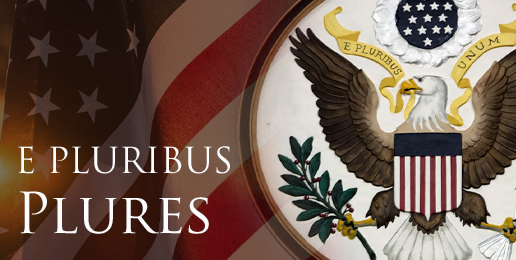
For most of our history, America was not unified by blood, location, or tribe, but by a shared creed and a common identity. E pluribus unum, out of many, one, has been our motto. The many were real—different regions, cultures, denominations, ethnicities—but they were expected to be woven into a single fabric, bound by the U.S. Constitution, the Declaration of Independence, and a widely shared moral vocabulary that took both virtue and vice seriously.
Today, that unity is dissolving. The “we” is being replaced by a proliferation of identities—race, gender, sexual orientation, immigration status, victim class—each competing for recognition, privilege, and power.
This shift has consequences.
Research on social cohesion shows that as group identities harden and shared identity thins; trust erodes and unifying bonds decay. Robert Putnam’s now-famous work on diversity and community underscores this point: in more diverse, fragmented neighborhoods, people of every race “hunker down”—trusting neighbors less, withdrawing from community life, and retreating into private worlds.
The old aspiration of E pluribus unum is quietly being traded for E pluribus plures: out of many, more and more separate.
A nation cannot long endure when it forgets what unites it.
In addition, we are also experiencing a spiritual collapse.
America was not founded as a theocracy, and the U.S. Constitution was not written as spiritual guidance. But the men who framed those documents lived in a mental and moral universe shaped by Christian belief. They saw a Creator who endowed us with “unalienable rights,” the reality of sin, the need for virtue if we were to be self-governing, and the certainty that all men would ultimately give an account before God. They assumed that a free people would be morally serious—that external checks could not substitute for internal restraint.
That view is rapidly fading. In 2007, nearly four out of five American adults identified as Christian; today, that number is closer to three out of five and is falling among younger generations, according to Pew Research. Also, according to Pew, weekly church attendance and institutional membership have plunged. For the first time in our history, fewer than half of Americans belong to any religious body at all.
Even more revealing is the collapse of belief in objective moral truth. Recent research finds that a large majority of Americans now reject absolute moral standards, saying instead that they “decide for themselves” what is right and wrong, often guided by feelings or personal preference rather than Scripture.
When truth becomes a matter of private mood, “right” and “wrong” inevitably become negotiable. The fear of God is replaced by the fear of social disapproval—or no fear at all.
A people that no longer believes in a Judge above human judges, or in laws above human laws, will inevitably begin to treat all laws as subject to being molded by anyone with the power to do so. When eternity vanishes from view, the only constraint is the will of the powerful.
You can see the revolt against reality in the debates that rage on TV news and in thousands of podcasts. They continue, endlessly, 24/7.
We are asked to affirm that “men can get pregnant,” despite the medical and biological fact that only human beings with female reproductive anatomy can give birth to a child. Redefine “man” to include biologically female persons who identify as male, and suddenly a slogan masquerades as a scientific discovery.
What changed was not the body, but the language.
Likewise, we are told that “woman” is an inner feeling, not a reality rooted in chromosomes and anatomy, even as our entire medical industry continues to rely on those biological distinctions when lives are at stake. Law and policy are being pulled in opposite directions: one world in which sex is treated as fluid for ideological purposes; another in which sex remains stubbornly binary because biology does not bend to slogans.
The same logic has been tested, more awkwardly, in the realm of race. The controversy surrounding figures like Rachel Dolezal exposed an uncomfortable inconsistency: the idea that one can “identify” as another race by choice, as if centuries of ancestry could be overwritten by personal narrative.
Many who embrace radical gender fluidity suddenly slam the brakes when the same reasoning is applied to race, revealing that this is not a coherent philosophy but a set of selectively favored exceptions.
In all these cases, the same underlying theme is at work: subjective identity is elevated above the created reality. Feelings over facts. Language is severed from the world it was meant to describe and pressed into service as an instrument of will.
Resisting this—as we all should and must—is not cruelty; it is sanity.
A civilization that can no longer say, with confidence, what a man is, what a woman is, what a mother, a father, a family, a citizen is, is a civilization already deconstructing.
Meanwhile, even in the realm of man-made law, we are witnessing a revolution being carried out in the shadows—through bureaucratic maneuvering and selective enforcement rather than through open, accountable legislation.
Bureaucrats use the power of the administrative state to reshape statutory intent through regulations, memos, consent decrees, and enforcement choices. U.S. Supreme Court Justice Neil Gorsuch took aim at these regulatory tyrants in his book “Over Ruled: The Human Toll of Too Much Law,” documenting how ordinary Americans are “getting whacked” by an explosion of rules that never received a vote from their elected representatives. In effect, policy is rewritten by agencies, by the courts, by executive officials who often cloak their actions in the rhetoric of “compassion,” “equity,” or “emergency.”
The form of the law remains, but its substance changes, sometimes dramatically. Statutes say one thing; guidance quietly requires something else entirely. Where the law once demanded equal treatment, new doctrines carve out exceptions for favored classes in the name of empathy. Where borders, crimes, and categories used to be relatively firm, they are now selectively blurred—again, ostensibly for compassionate reasons.
Genuine compassion is a Christian virtue. But detached from truth and justice, “compassion” becomes an acid that dissolves the rule of law itself. When mercy is granted not on the basis of repentance, equal standards, and prudence, but instead on political fashion or identity status, the message is that rules apply only to the unfavored.
At that point, why should ordinary citizens respect laws that even the authorities treat as optional?
Put all this together, and a pattern emerges.
- Our shared national identity—E pluribus unum—is weakening, replaced by identity blocs that view one another not as fellow citizens but as rival tribes.
- The Christian moral framework that once provided internal restraint, a fear of God, and a concern for eternity has eroded, leaving individualism and moral subjectivism in its wake.
- Our culture’s elites are openly contesting fundamental created reality—sex, family, human limits, even the boundary between truth and feeling—while punishing those who insist that words must still align with reality.
- The legal order is being bent and reinterpreted through bureaucratic and judicial “backdoors,” in the name of compassion and progress, in ways that steadily detach law from both the people’s will and the facts.
A great nation can survive hard times, bad leaders, even grave injustices—if it remains tethered to reality and to God. What it cannot survive indefinitely is the loss of its moorings: abandoning the Creator who endowed us with our rights, redefining the very fabric of human nature, and hollowing out the rule of law while still mouthing its slogans.
The City on a Hill is not yet rubble. Its lights still shine, however dimly, in countless families, congregations, and communities that stubbornly cling to truth, honor their oaths, and fear God more than man. Yet the foundations are being chipped away. The hill is eroding beneath us. And below that hill is not a serene valley—it is a swamp ruled by raw power, rife with tribal conflict, and the home of manufactured “realities,” where the strongest win and the weakest suffer.
If we do not return to reality as God made it and to law as our Founders framed it—anchored in fixed truths about man, God, and justice—we will continue to drift. And nations that drift long enough do not simply correct course. They break apart.
Sadly, today, most Americans under 55 do not believe that we live in the greatest nation that has ever been. But we do, not because it has ever been perfect, but because it was built on the belief, unique in human history, that there is something above both ruler and ruled: a Creator, a moral law, and a truth that does not bend. If we will not bow to that reality, we will be swallowed by the swamp we are sliding into.