The House Epstein Report and the Investigation It Left Undone
On November 10, 2026, the majority staff of the House Committee on Oversight and Government Reform published its findings on the Jeffrey Epstein case: a 137-page report with 770 footnotes titled A Review of the Federal Government’s Mishandling of the Jeffrey Epstein and Ghislaine Maxwell Criminal Investigations. The Committee worked for fifteen months. It took testimony from nineteen people and reportedly reviewed “hundreds of thousands of documents.”
The report’s title promises a review of how the federal government handled the case. A review of that kind sets out, agency by agency, what was done right and what was done wrong. The agencies were the U.S. Attorney’s Office that made the deal, the FBI that investigated, the immigration and customs services that admitted the girls, the Bureau of Prisons that held Epstein when he died, and the government of the U.S. Virgin Islands, where his island was located. The report examines the first through one witness and the fourth through one guard. Its witness list includes no one from the others.
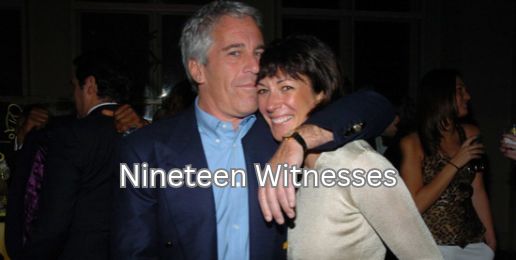
Nineteen witnesses
Seven witnesses were deposed under subpoena, and twelve voluntarily agreed to be interviewed (Report, pp. 8–9). The nineteen are two former attorneys general, a former president and a former secretary of state, a sitting cabinet secretary, four wealthy businessmen, five people who worked for Epstein, a former prosecutor, a former presidential aide, a lawyer, a banker and a jail guard. One of them, Ghislaine Maxwell, invoked the Fifth Amendment. One, Sarah Kellen, gave new evidence.
Who is on that list is more important than how long it is. The people the report criticizes for their decisions are absent from it. The appendix to this article names more than sixty people who do not appear on the witness list. Every one is named in the public record. Many are named in the Committee’s own report.
One witness for the central decision
The federal government’s handling of Epstein came down to one document: the 2007 non-prosecution agreement that let him plead to two state charges, serve 13 months with work release, and leave with immunity for himself, four named assistants and “any potential co-conspirators.”
One person who worked in the U.S. Attorney’s Office for the Southern District of Florida in 2007 was questioned: Alexander Acosta, the U.S. Attorney of the Southern District at the time. He told the Committee,
“I was not involved in how the investigation proceeded” (p. 47).
Were the four women given immunity ever interviewed?
“I do not recall. And I wouldn’t have reason to recall” (p. 48).
Why was the immunity clause written more broadly than Epstein’s own lawyers proposed?
“I don’t recall any conversations about this” (p. 48).
Who held the computers taken from Epstein’s house before the police search?
“I have no idea” (p. 55).
The Justice Department’s own 2020 review questioned five prosecutors under oath: Acosta, Jeffrey Sloman, Matthew Menchel, Andrew Lourie and Marie Villafaña (OPR Report, Executive Summary, p. vi). Villafaña was the line prosecutor. Menchel was chief of the criminal division. Sloman was first assistant and later U.S. Attorney. Lourie managed the West Palm Beach office and, in the month the agreement was signed, was moving to Washington as chief of staff to the head of the Criminal Division (OPR Report, pp. 62, 71). The Committee questioned one of the five. Lourie’s name is not in its report. Its witness list also omits Bruce Reinhart, a prosecutor in the West Palm Beach office, and Barry Krischer, the state attorney whose grand jury returned a single count. The House report cites the 2020 review more than twenty times.
The report says the failures belonged to prosecutors “in South Florida and Washington, D.C.” (p. 46). It names no official in Washington. The 2020 review names five. Alice Fisher headed the Criminal Division, and Sigal Mandelker was her deputy. Andrew Oosterbaan ran its child-exploitation section. Deputy Attorney General Mark Filip and his aide John Roth heard Epstein’s appeal in 2008. Roth told the review he read written submissions only and did not examine the agreement’s terms, which he took to be a “dead letter” (OPR Report, pp. 2, 108–109). None of the five names is in the House report.
The Committee subpoenaed six former attorneys general (p. 10). None of the six held the office on September 24, 2007, when the agreement was signed, or on June 30, 2008, when Epstein entered his plea. Peter Keisler was acting attorney general on the first date, and Michael Mukasey on the second. Neither name appears in the report.
Acosta told the Committee the evidence was thin and “all local” (p. 59). Michael Reiter, the Palm Beach police chief who supervised the case, told the Miami Herald: “This was not a ‘he said, she said’ situation. This was 50-something ‘shes’ and one ‘he’ — and the ‘shes’ all basically told the same story” (Julie K. Brown, Nov. 28, 2018). The Herald reported that federal prosecutors identified 36 underage victims. Villafaña wrote an 82-page memorandum supporting a 60-count indictment (OPR Report, p. 25). Oosterbaan, the Department’s child-exploitation chief, read it and wrote to Acosta’s deputies in July 2007: “Her charging decisions are legally sound.” He added that “the balance of available precedent favors us” and called the case “a challenge well worth facing” (OPR Report, p. 47).
The review found no professional misconduct. It found that Acosta exercised poor judgment and that federal prosecution was a “viable” alternative to the agreement (pp. 169–170).
None of that is in the House report. Reiter’s name is absent. So are the indictment and Oosterbaan’s opinion. Committee counsel put both to Acosta. Of the indictment he said it “was never fully reviewed by the supervisory chain.” Asked whether he was ever made aware of Oosterbaan’s views, he answered, “I was not” (Acosta transcript, pp. 40, 152). He pointed to a second lawyer from the same section who called a trial a “crapshoot.” The 2020 review places her assessment in early 2008, after the agreement was signed (OPR Report, pp. 102–103). The report prints Acosta’s “crapshoot” remark and omits the rest. It says that the 2020 review “highlighted” that the case “was weakened by legal issues and potential defenses to each charge” (p. 53). The page it cites says the office’s managers had “concerns about legal issues, witness credibility, and the impact of a trial on the victims” (Executive Summary, p. x). The words “legal issues and potential defenses relating to each proposed charge” appear in the review as a description of what Villafaña’s own memorandum analyzed on its way to recommending 60 counts (p. 25).
The report documents conflicts of interest for two prosecutors, and neither is on its witness list. Menchel was first to propose the agreement, had an undisclosed prior relationship with one of Epstein’s defense lawyers, and met and dined with Epstein afterward (pp. 49–50). Reinhart incorporated his private firm on October 23, 2007, while still a prosecutor, at the West Palm Beach address where Epstein’s Florida Science Foundation was incorporated nine days later (pp. 50–51).
In July 2007, Villafaña wrote to Menchel: “you have started the plea negotiations as though we are in a position of weakness.” She asked to present the case to Acosta and did not get the meeting (OPR Report, pp. 41, 45). Weeks later, Epstein hired Kenneth Starr and Jay Lefkowitz of Kirkland & Ellis, the firm where Acosta had once worked. The House report notes that Acosta recused himself from the case in late 2008. The 2020 review gives the reason: he “had begun discussions with the firm about possible employment” (OPR Report, pp. 4–5, 59). The firm’s name is not in the House report. Acosta told the Committee why he thought Epstein chose those lawyers: “having worked with me, they would know my thinking and my style,” and “they could likely get an appeal to Washington, D.C.” He said Epstein also hired lawyers with ties to his criminal chief, his first assistant, and the head of the Palm Beach office, as well as a prosecutor from his own office: “So there is a pattern here that we were all well aware of” (Acosta transcript, pp. 89–90). He dated his job conversation with Lefkowitz to a dinner around Thanksgiving 2008, five months after the plea, and said he sought no position (pp. 109–110). The report includes none of it.
The computers
Palm Beach police found Epstein’s computers gone when they searched his house on October 20, 2005. The report says prosecutors later “located an unnamed individual they believed to possess the evidence” (p. 54).
The Justice Department has named that individual publicly since its January 2026 release. A 2005 memo from private investigator William Riley records that investigator Paul Lavery went to the house less than two weeks before the search and removed more than 100 items, among them three computers. Federal prosecutors subpoenaed Riley and dropped the effort after the plea (ABC News, March 27, 2026). The Committee’s ranking Democrat asked the investigators for voluntary interviews in March. The chairman can compel them. The majority’s report contains none of their names.
The 2020 review faulted Acosta for closing the case “without adequately addressing ways in which a federal case potentially could have been strengthened, such as by obtaining Epstein’s missing computer equipment” (OPR Report, p. 170). A prosecutor on the case told the review, “We knew his house was wired with video” (p. 46). Epstein’s lawyers wrote into their draft of the agreement that every demand for the computers “will be withdrawn upon the execution of the Agreement” (pp. 69–70).
Darren Indyke, Epstein’s lawyer for 23 years, told the Committee he knew of “computer hard drives in the possession of private investigators” (p. 57). Asked where the drives are now, he said, “I have no idea.” He gave the investigators’ name as Riley Kiraly and said his sense was that the drives were never given to law enforcement (Indyke transcript, pp. 142, 175–176). The report includes none of those answers.
The FBI
The Committee subpoenaed two former FBI directors. Neither testified, and no agent or official of the Bureau appears on the witness list.
The report’s own pages hold the questions. The Bureau received Maria Farmer’s complaint in the 1990s; the report mentions it once, inside a question to Acosta (p. 58). Agents went to Lesley Groff’s home in August 2007, and a prosecution document says Epstein “instructed Ms. Groff to not speak with the agents and reprimanded her for letting them into her home” (p. 61). Agents planned to serve a target letter on another assistant at Teterboro Airport, and Epstein diverted his plane to the Virgin Islands (p. 61). Kellen testified that two agents approached her at the St. Thomas airport in 2007, and that Epstein told her to stay where she was, walked over, and spoke with them. Ten minutes later, he came back. “The agents were gone” (p. 62). The report states that from 2009 to 2019 no one at the Justice Department or the FBI sought to reopen the case (p. 66).
The 2020 review interviewed the FBI case agent and her squad supervisor. It records that the Bureau planned to arrest Epstein in May 2007, that the supervising agent was “extremely upset” when prosecutors held back, and that the squad supervisor confronted Sloman over the decision to forgo federal charges (OPR Report, pp. 27, 59). The Committee questioned neither.
The report does not identify the agents, and it records no request to the FBI to explain any of this. What I previously reported in Jeffrey Epstein’s Secret War on the Human Genome also goes unmentioned: the FBI interviewed ranch manager Brice Gordon in August 2007, and the notes of that interview are missing from the released files.
How the girls got in
Nadia Marcinkova was born in Slovakia in 1986. As I reported in Part 3: The Troubling Case of Jeffrey Epstein, she reportedly came to the United States as a teenager on a modeling visa Epstein arranged, lived in an apartment in his brother’s building, was named in the 2007 agreement as a co-conspirator, later earned pilot licenses and started an aviation company. She has not been seen publicly since January 2024.
Who approved her visa? Who admitted a girl that age at the airport without a parent or guardian? Under what status did she stay? Is she a U.S. citizen? How did she become one? How many other girls came the same way? I asked most of these questions in July 2025 and again in February. They remain unanswered.
The House report blanks Marcinkova’s name. It says Epstein and Jean-Luc Brunel ran “potential visa and immigration fraud” (p. 33) and finds that “the U.S. and foreign governments failed to identify clear indicators of human trafficking and immigration fraud” (p. 132). The same finding assigns the enabling role to American Express, which booked the flights. The words “customs,” “Homeland Security,” and “consular” do not appear in the report. No official from Customs and Border Protection, Immigration and Customs Enforcement, or the State Department appears on the witness list.
The 2020 review shows the question was on the table in 2007. Villafaña counted Immigration and Customs Enforcement among the agencies investigating Epstein. His lawyers asked the government to promise that “no immigration proceeding will be instituted” against two of his assistants. Villafaña told the review she saw no evidence of fraud in their paperwork: “I think that they were both in status” (OPR Report, pp. 41, 69–70). The question is how they came to be in status.
The money
The Committee subpoenaed JPMorgan Chase and Deutsche Bank in November 2025 and says it reviewed what they produced (p. 115). The footnotes in its banking section cite a newspaper investigation, court records the Justice Department released, and witness transcripts. I found none citing a document either bank produced. The report states that wires “totaling millions of dollars” went to “Russia, Ukraine, and Eastern Europe” (p. 95) and names no recipient. The footnote for that passage cites The New York Times. One banker testified. No one from Deutsche Bank did.
Epstein’s accountant named five clients who paid him fees: Leslie Wexner, Glenn Dubin, Steven Sinofsky, Leon Black and the Rothschild family (p. 72). Two were questioned.
The accountant said Ariane de Rothschild paid Epstein “20- or $25 million” (p. 75). What I previously reported in Epstein: The Information Mercenary is the record behind that figure. On July 22, 2015, while her bank negotiated with the Justice Department over undeclared American accounts, Epstein emailed the bank’s lawyer, former White House Counsel Kathryn Ruemmler, proposing a fee that rose as the bank’s penalty fell, up to $25 million. He asked: “Do you see any legal issues?” (DOJ, EFTA02493823). The bank settled for $45.2 million. Epstein’s company received $10 million from the bank and $14,999,980 from Benjamin de Rothschild within days. The Committee interviewed Ruemmler in July. A search of the 171-page transcript finds no question about that email or that fee.
The rest of the world
The report gives six pages to Epstein’s reach abroad (pp. 100–105). They cover Andrew Mountbatten-Windsor’s 2010 visit, Ehud Barak’s stays at the townhouse, Brunel’s modeling agency, and airline bookings.
Other governments have acted on the same files. British police arrested Mountbatten-Windsor on February 19, 2026, and former cabinet minister Peter Mandelson four days later, each on suspicion of passing government information to Epstein. Norway opened a corruption case involving former prime minister Thorbjørn Jagland. New Mexico created a commission with subpoena power to examine Epstein’s ranch. French financial prosecutors searched a bank’s Paris offices. I reported the British, Norwegian, and New Mexico actions in The Intelligence Operation, The Information Mercenary and Jeffrey Epstein’s Secret War on the Human Genome.
Mandelson’s name is not in the House report. Jagland’s name is not in it. The word “ranch” does not appear. Africa appears twice in passing. China does not appear. Carbyne, the security-technology company Epstein financed with Barak, does not appear.
The Virgin Islands
Epstein ran his company, Southern Trust, from St. Thomas. The territory’s Economic Development Commission gave Epstein tax breaks worth $300 million, and his estate returned $80 million of them in a settlement. Cecile de Jongh, the wife of former governor John de Jongh, worked for Epstein as his office manager. On the last day of 2022, four days after Attorney General Denise George sued Epstein’s bank, the governor fired her. His office said the firing was unrelated to the lawsuit (Fortune, Nov. 17, 2023).
The Committee wrote to the territory for documents in November 2025 and says it reviewed what it received. The report mentions the Virgin Islands eleven times. None of those passages concerns its government’s conduct.
Wexner under oath
Wexner and Charles Bronfman founded the Mega Group in 1991, the year Wexner gave Epstein power of attorney over his fortune. In They All Knew, I reported what federal records show about the organized-crime connections of the group’s early members and the access one of them, Max Fisher, had to every administration from Eisenhower through George W. Bush.
The Committee deposed Wexner for five hours. As I reported in The Wexner Deposition: A Study in What Wasn’t Asked, it asked him nothing about the group. It did not ask about the camera system in the house he sold Epstein, about the gap between the roughly $20 million sale price and the $77 million valuation prosecutors later gave it, or about who hired Kroll to investigate Epstein. The group is not mentioned in the final report.
Seventeen visits
White House visitor logs record Epstein signing in 17 times between 1993 and 1995 (ABC News, February 2026). The New York Times reported that the first visit came in February 1993, with Wexner (reprint, Dec. 25, 2025). Wexner told the Committee the visit “Didn’t happen” (Wexner transcript, p. 107). Records at the Clinton Presidential Library show that Epstein gave $10,000 to the White House Historical Association that year and was on the invitation list, with Ghislaine Maxwell, for a donors’ reception in the residence. A source told The Daily Beast that Epstein met at least three times with Mark Middleton, an assistant to the chief of staff. On April 27, 1995, Lynn Forester wrote the president that she had used “my fifteen seconds of access to discuss Jeffrey Epstein and currency stabilization” (The Daily Beast, July 24, 2019).
In Part 3: The Troubling Case of Jeffrey Epstein, I asked why Epstein visited the White House 17 times and wrote that his access there had never been explained.
The Committee’s counsel questioned Bill Clinton under oath about the 17 visits on February 27. Clinton did not dispute the number. “I didn’t know he was coming, so I certainly didn’t know what he was coming about,” he said. Of the visits, he said, “I don’t know who he saw.” Asked whether he or his staff had ever reviewed the records of Epstein’s connections to his White House, he answered, “To the best of my knowledge, no” (Clinton transcript, pp. 31–32, 51).
A visitor log names the person visited. Middleton died in 2022. The Committee’s counsel asked Clinton about former Treasury Secretary Robert Rubin by name, and Rubin does not appear on the witness list. The logs are in a federal archive the Committee can subpoena.
The report does not mention the visits. Its account of how the two men met is one sentence: “Epstein’s donations to Harvard for brain research led to his introduction to President Clinton” (p. 99). The next footnote on that page cites the ABC News timeline that reports the 17 sign-ins.
Intelligence
In at least five articles, I have cited Acosta’s reported statement that he was told Epstein “belonged to intelligence.” The report says Acosta denied making that statement (p. 104). Committee counsel told him that Steve Bannon had publicly said Acosta told him so. Acosta answered, “I never made that assertion,” and added: “If you want to know that, you need to ask the intelligence community” (Acosta transcript, pp. 147–148). Bannon’s name is not in the report, and he is not on the witness list. Acosta gave the Justice Department’s 2020 review the same answer. That review “found no evidence” that Epstein was a cooperating witness or an “intelligence asset” (OPR Report, p. 169). Its sources on the point were the prosecutors and their case file. The passage records no inquiry to any intelligence agency.
The Committee’s inquiry consisted of asking each witness whether Epstein ever said he worked for an intelligence service, or whether the witness suspected it. Each said no, and the report concludes the matter has “not been conclusively established” (p. 103). No one from the FBI, the CIA, or the Justice Department’s National Security Division appears on the witness list.
Epstein’s calendars, which the Committee itself released, record three stays at his Manhattan apartment by Yoni Koren, an Israeli military intelligence officer and aide to Barak (Drop Site News). Koren’s name is not in the report.
A Justice Department record released this year states: “At some point in time, Jeffrey Epstein worked for the United States government as a financial bounty hunter.” It lists six people with “significant knowledge”: Barak, Wexner, George Mitchell, Bill Richardson, Bill Clinton and Doug Band (The Information Mercenary). Three of the six testified before the Committee. The word “bounty” does not appear in its report.
Testimony it did not believe
The report calls Groff’s account “not credible” and finds it “more likely that she provided false or misleading information to the Committee” (p. 24). It calls Jes Staley’s explanation of his emails “not credible” (p. 36). Its response is a recommendation that the Justice Department “should further question” Groff (p. 130).
Alan Dershowitz withdrew five days before his interview and received no subpoena (p. 18). Leon Black sat for an interview on June 26 and, the report says, would not answer questions about the non-disclosure agreement Epstein helped him arrange. Subpoenaed for a deposition, he refused to appear, sued the Committee, and was held in contempt by unanimous consent on September 16, 2026 (pp. 18, 67–68). The Committee has not obtained the testimony it sought.
What it produced
Nineteen transcripts are public. Kellen’s testimony is new evidence: the order to remove the computers, the agents at the airport, and the men she says abused her. The Estate’s records and the Epstein Files Transparency Act put millions of pages before the public. The report concedes that “there remain numerous individuals with potentially relevant information whom the Committee has not yet had the opportunity to interview” (p. 7). The Committee’s announcement says the report “culminates” its investigation.
The larger question
In You Have the Tools, I described what most Americans have been told about Epstein and what I believe the record shows:
“You have heard that he was a rich man with an appetite for young girls and friends who shared it, and that the only remaining question is which politician from which party more frequently flew on his plane or was a guest at one of his properties. That is the story most of the press tells, and the story each side uses against the other.
The record shows something much larger and far different. What I believe, and cannot yet prove, is that the dirty-old-man story distracts from international corruption on a scale never before seen, involving politicians, intelligence services, bankers, business, media, and entertainment figures on almost every continent. That is a theory. I am doing my best to disprove it. So far, I have not been able to.”
A congressional investigation with subpoena power could have tested that theory. The House report offers no evidence that disproves it and no evidence that supports it. The investigators contributed little toward answering it.
A mystery
The Committee had subpoena power. It had fifteen months. It had unanimous votes when it asked for them. It had access to three million released files and the bank productions it subpoenaed. It deposed a former president.
With all of that, it took testimony from one person about the plea deal, one banker about the money, and no one from the FBI, the immigration services, or the intelligence agencies. Of the findings listed at the end of its report, one mentions a foreign government, and that finding faults American Express (p. 132). Why the investigation was this weak, and why its findings are this anemic, is a mystery. Only the Committee’s members can explain it.
The Constitution gives Congress the power of inquiry so that those who administer the law answer to those who live under it. Epstein received a federal immunity agreement that no ordinary defendant charged with abusing children would be offered. Nineteen years later, no one who drafted it has been required to explain it under oath to the people’s representatives.
In January 1975, the Senate voted 82 to 4 to create a select committee to investigate the intelligence agencies. Over 16 months, with a staff of 150, Senator Frank Church’s committee questioned about 800 witnesses and reviewed 110,000 documents (Senate Historical Office). The House committee questioned 19.
Every reader has a representative and two senators. Ask each of them, in writing, to support a select committee on the Epstein case with authority to obtain records from the FBI, the CIA, and the Justice Department. Send them the appendix that follows. It lists what that committee should ask.
Appendix: What the House Left Undone
We checked each item against the full text of the report. “What I previously reported” refers to the article linked.
People who do not appear on the Committee’s witness list
The plea deal
- Marie Villafaña, line prosecutor, who drafted the 60-count indictment.
- Matthew Menchel, criminal chief, first to propose the agreement.
- Jeffrey Sloman, first assistant, later U.S. Attorney.
- Bruce Reinhart, the prosecutor who left to represent Epstein’s staff.
- Peter Keisler and Michael Mukasey, who led the Justice Department when the agreement was signed and the plea entered.
- Andrew Lourie, who managed the West Palm Beach office and moved to the Criminal Division’s front office as the agreement was signed.
- Alice Fisher, Sigal Mandelker and Andrew Oosterbaan of the Criminal Division.
- Mark Filip and John Roth, who heard Epstein’s 2008 appeal in the Deputy Attorney General’s office.
- The FBI case agents and their squad supervisor, whom the 2020 review interviewed.
- Barry Krischer, state attorney.
- Michael Reiter, Palm Beach police chief.
- Ric Bradshaw, the sheriff whose office ran the work release the report calls “an irresponsible abuse of discretion.”
Epstein’s lawyers and investigators
- Jay Lefkowitz, whom I previously reported as architect of the agreement (Part 3: The Troubling Case of Jeffrey Epstein).
- Jack Goldberger, Lilly Ann Sanchez and Martin Weinberg.
- Alan Dershowitz, who withdrew. What I previously reported about his flights beginning in 1998 and roughly $4 million in payments is in The Intelligence Operation.
- Robert A. Gold, the former federal prosecutor Epstein hired in the 1980s (Part 2). Gold described that work to The New York Times for its December 2025 investigation of Epstein’s fortune (reprint).
- William Riley, Paul Lavery and Stephen Kiraly, the private investigators.
Epstein’s staff
- Adriana Ross and Nadia Marcinkova, two of the four women given immunity. The report prints two of the four names and leaves these two blank.
- Larry Visoski and the other pilots.
- Karyna Shuliak, who received Epstein’s last unmonitored call (The Troubling Case of Jeffrey Epstein).
- Bella Klein and Harry Beller, who handled the cash and the accounts.
- Arda Beskardes, the immigration attorney for the women.
- Mark Epstein, whose company owned the apartments where the women were housed.
- Jeffrey Schantz, co-manager of Epstein’s firm.
Modeling and recruitment
- Massimo Parisi of Baltic Model Management.
- Barbro Ehnbom.
- Frédéric Fekkai and Philip Levine, whom Kellen accused in testimony and the Committee referred to the Justice Department.
- Ed Razek, who hired the Victoria’s Secret
Finance
- Glenn Dubin and Steven Sinofsky, fee-paying clients.
- Ariane de Rothschild, who can account for both payments to Epstein’s company, including the one recorded from her late husband.
- Fabrice Aidan.
- Stephen Cutler, the JPMorgan general counsel who wanted Epstein
- Any officer of Deutsche Bank.
- Mort Zuckerman.
- Andrew Levander, who ran the review that cleared Leon Black and who, the report’s own footnote says, used Epstein’s help as a federal prosecutor in the 1980s.
Wexner’s circle
- Abigail Wexner, who found the theft.
- Robert Meister, who introduced Epstein to Wexner. Meister told Vanity Fair in 2021: “My wife and I told him and Abigail hundreds of times to stay away from Epstein.” Committee counsel read that to Wexner and asked whether the Meisters had warned him. He answered, “Never” (Wexner transcript, p. 14). Meister can say which account is true. The report mentions him once, as the man who made the introduction.
- Jules Kroll and the director who hired him (The Wexner Deposition: A Study in What Wasn’t Asked).
Science and universities (Jeffrey Epstein’s Secret War on the Human Genome)
- Martin Nowak, George Church, Lawrence Summers, Lawrence Krauss.
- Michael Crow, president of Arizona State University and chairman of the CIA’s venture fund.
- Bryan Bishop.
- Leon Botstein and Joi Ito.
The Clinton White House
- Robert Rubin, whom the Committee’s counsel named in questioning Clinton.
- Thomas “Mack” McLarty, the chief of staff whose assistant, Mark Middleton, met with Epstein. Middleton died in 2022.
- Ann Stock, the social secretary listed as the contact for the 1993 reception.
Foreign and political figures
- Peter Mandelson, Thorbjørn Jagland, Ehud Barak, Andrew Mountbatten-Windsor, Sultan Ahmed bin Sulayem.
- Lynn Forester de Rothschild.
- George Mitchell.
- Steve Bannon.
- Hector Balderas, the New Mexico attorney general who halted the state’s 2019 inquiry at federal request.
People whose whereabouts or roles the report leaves unresolved
- Brice and Karen Gordon, who managed the New Mexico ranch and later the island, and who have not been found. What I previously reported: the notes of Brice Gordon’s 2007 FBI interview are missing from the released files (Secret War on the Human Genome).
- Nadia Marcinkova, whose whereabouts have been unknown since January 2024 (Part 3).
- Adriana Ross.
- The unnamed “potential co-conspirators” the 2007 agreement protected. The report criticizes the clause and identifies no one it covered.
- The ten co-conspirators listed in an FBI email (The Wexner Deposition).
- The agents who approached Kellen at the St. Thomas airport in 2007.
- Other girls who entered the country as Marcinkova
Agencies and governments the report does not examine
- The FBI: the 1990s Farmer complaint, the 2007 contacts with Epstein’s assistants, the missing Gordon interview notes, and ten years without a reopened case.
- Customs and Border Protection, Immigration and Customs Enforcement and the State Department’s consular service: not named in the report. The line prosecutor counted ICE among the agencies investigating Epstein in 2007 (OPR Report, p. 41).
- The government of the Virgin Islands: the tax breaks, a former governor’s wife on Epstein’s payroll, and the firing of the attorney general who sued his bank.
Intelligence questions the report does not address
- The 2020 FBI memorandum reporting that Epstein relayed information to Israeli intelligence (The Intelligence Operation).
- Yoni Koren’s stays at Epstein’s apartment, recorded in calendars the Committee released, and the Israeli government security detail there. Koren died in 2023.
- Carbyne, Pinhas Buchris, and Epstein’s $1 million loan in March 2015 (The Information Mercenary).
- Robert Maxwell’s intelligence ties, which the report calls “rumored.”
- Steve Bannon, whom Committee counsel named as the source of the “belonged to intelligence” account, and the other officials reported to have heard Acosta’s remark in 2017.
- The expired Austrian passport under a false name with a Saudi address, and who issued it (Part 2).
- Epstein’s Chinese contacts and his emails to Bannon about Guo Wengui.
- The wires to Alfa Bank and Sberbank flagged in the 2019 bank filing.
Government use of Epstein
- The Justice Department record describing Epstein as a government “financial bounty hunter.” The Department’s 2020 review points the other way: it found no evidence that Epstein cooperated in any federal case, and prosecutors on the Bear Stearns case told the line prosecutor they “had never heard of him” (OPR Report, pp. 118, 169). The two records have never been reconciled.
- Epstein’s work in the 1980s with federal prosecutors in New York on the Drysdale collapse (Part 2).
- Steven Hoffenberg’s account that Epstein’s ties to those prosecutors kept him out of the Towers Financial
- Epstein’s work for arms dealers Douglas Leese and Adnan Khashoggi.
Subjects absent from the report
- Epstein’s 17 visits to the Clinton White House from 1993 to 1995: whom he saw and what business he had there. What I previously reported is in The Troubling Case of Jeffrey Epstein and Part 3.
- The Mega Group. What I previously reported in They All Knew and The Epstein Files Release: a federal Bureau of Narcotics record lists Detroit organized-crime figure Joseph Bommarito as holding an interest in “Aurora Gasoline Royalties.” Aurora Gasoline was the company of Max Fisher, an early member of the group and Wexner’s mentor. The Bronfman fortune began with Sam Bronfman’s Prohibition-era liquor trade and his dealings with Meyer Lansky.
- The camera systems in Epstein’s houses.
- The sale of the 71st Street house: bought for $13.2 million, sold to Epstein for about $20 million, valued by prosecutors at $77 million (The Wexner Deposition).
- The Wexner Foundation’s $2.3 million to Barak.
- MC2 models on Victoria’s Secret runways after the trafficking allegations.
- Zorro Ranch, the plan to impregnate women there, and the absence of any federal on-site investigation.
- New Mexico’s truth commission and its interim report.
- Epstein’s correspondence with scientists on genetics. The words “genome” and “DNA” do not appear.
- Epstein’s emails planning Barak’s travel to Côte d’Ivoire and Mongolia.
- Mandelson’s and Mountbatten-Windsor’s transfers of government information.
- The retroactive bank filings: more than $1.5 billion in suspicious transactions across four banks. Two of the four banks are not named in the report.
- Senator Ron Wyden’s investigation.
- The comparison with the Keith Raniere prosecution, tried the same summer Epstein was indicted (Part 3).
- Michael Baden’s conclusion that the death was a likely homicide, and the scene that went unphotographed (The Troubling Case of Jeffrey Epstein).
- The names Representatives Thomas Massie and Ro Khanna found improperly redacted, and the list of withheld records the transparency law requires (The Epstein Files Release).