Inviting the Wolves into the Oval Office
How a Detroit oil magnate with documented mob connections advised every president
from Eisenhower to George W. Bush—and why the Secret Service let it happen.
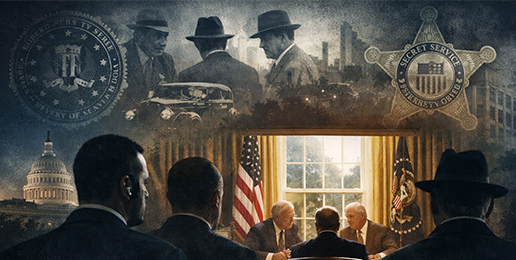
No one receives repeated private access to the President of the United States without a thorough Secret Service background investigation.
This is not discretionary. It is a mandatory policy. The Secret Service maintains the White House Access Control System and the Worker and Visitor Entry System, both of which require comprehensive background screening before granting access. These checks draw on the FBI’s National Crime Information Center—a computerized index of criminal records, fugitives, and the Secret Service’s own Protective File. As former Secret Service officials have confirmed, the agency conducts criminal background checks on anyone who will spend more than a passing moment in physical proximity to the president, wherever the president goes.
For someone granted not merely a single White House tour but repeated, close access across multiple administrations—someone who serves as an unofficial adviser, meets privately in the Oval Office, and is consulted on sensitive foreign policy matters spanning decades—the scrutiny is far more extensive than basic visitor screening.
An individual with documented organized crime connections in federal law enforcement files would be flagged immediately. Therefore, any president who repeatedly appointed such an individual did so with full knowledge of that background.
The conclusion is inescapable: when presidents granted access to individuals whose organized crime connections were documented in federal intelligence files, they knew. The Secret Service knew. The FBI knew. Access was granted, and the meeting was welcomed anyway.
What follows is not a story about a single corrupt individual who slipped through the cracks. It is a story about a system that identified individuals operating at the juncture of organized crime, legitimate business, and political power—and accommodated them, across party lines and across decades, because they served institutional interests that transcended any single administration.
What, exactly, do you think those interests might be?
Remember as you read this, facts are just facts. It’s the meaning, the implications, the consequences of those facts that you need to learn and understand. Facts always need interpretation and truth always needs an advocate.
In the historical record, Max M. Fisher is known as a Detroit oil businessman and philanthropist. He founded Aurora Gasoline Company in 1932, built it into one of the largest independent oil companies in the Midwest, with nearly 700 Speedway 79 gas stations, and sold it to Marathon Oil in 1959 for $40 million.
But Fisher’s real influence came after Aurora. He served as an adviser on Middle East and Jewish affairs to every administration from Eisenhower through George W. Bush, approximately five decades.
During the Nixon administration, Fisher had his most extensively documented relationship. A Nixon White House staffer stated, “Mr. Fisher was our dominant nongovernmental adviser on American-Israeli affairs.” Fisher was described as “a very close friend of the President” and served as Nixon’s unofficial ambassador to Israel. He received the Presidential Star in 1972 for his political support.
In 1975, Fisher met with President Ford and Secretary of State Henry Kissinger in the Oval Office to help ease diplomatic tensions between the U.S. and Israel. Despite Fisher’s Republican affiliation, President Carter invited him to witness the signing of the Camp David Accords. Reagan developed what was described as a “close, personal relationship” with Fisher, joking that “Max was someone you inherited when you became President.” George H.W. Bush worked closely with Fisher throughout the 1980s and continued the relationship in his own administration. Fisher maintained advisory connections through the George W. Bush presidency.
He was also one of the most successful Republican fundraisers from the 1960s through the 1980s and served as a delegate to multiple Republican National Conventions.
Despite this unprecedented access spanning five decades and eight administrations, Fisher deliberately avoided any formal government position requiring U.S. Senate confirmation. His authorized biography explains this as a preference for “operational flexibility.”
This raises an obvious question: Why would a man with unprecedented access to presidents—a man whose advice could influence presidential decisions on matters of war and peace—deliberately avoid U.S. Senate confirmation hearings and FBI background checks?
What would those investigations have found?
The answer appears in a U.S. Treasury Department Bureau of Narcotics internal intelligence reference document—a comprehensive federal law enforcement compilation profiling every known organized crime figure in the country, organized by city and distributed to Bureau of Narcotics field offices nationwide. The document is now publicly available through the Library of Congress.
Page 201 profiles Joseph “Scarface Joe” Bommarito: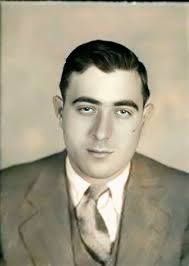
CRIMINAL HISTORY: FBI #145941, Detroit PD #37496, first arrest 1926 for armed robbery, numerous subsequent arrests for assault, murder, extortion, carrying concealed weapons, Prohibition, and state gambling laws.
CRIMINAL ASSOCIATES: Pete Licavoli, John Priziola, Mike Rubino, Tony Abate, John Licavoli—all of Detroit—and Frank Vitale, Cleveland. Federal authorities considered him “the most prominent ‘Numbers’ operator in the Detroit and down-river area of Michigan.”
BUSINESS: Has interests in Longfellow and Emerson Apartments, P&T Oil Co., Torosian Oil Co., Michigan Mutual Distributing Co., Aurora Gasoline Royalties, all in the Detroit area.
Aurora Gasoline was Max Fisher’s company—his refinery and gasoline marketing business, the foundation of his fortune.
The term “Aurora Gasoline Royalties” suggests a holding company or royalty structure—consistent with how organized crime typically held ownership interests through separate entities that received profit distributions from the operating company. This was not Bommarito’s only oil interest. The Bureau documented his stakes in P&T Oil Co., Torosian Oil Co., and Michigan Mutual Distributing Co., suggesting a coordinated strategy by the Detroit Partnership to dominate the regional fuel supply chain, which they actually did.
When a known organized crime figure holds a financial interest in a business—particularly a local or regional oil distribution business—it is not merely an investment. The mob controls not only the business but also its management. Ownership equals control.
Fisher’s Aurora Oil Company maintained full-capacity gasoline stocks throughout World War II despite federal rationing—an operational impossibility without access to black-market supply chains controlled by organized crime.
The black market supply chains that kept Aurora operating during rationing served a second, more strategically significant purpose. In July 1945, David Ben-Gurion met with eighteen influential American Jews at the Manhattan apartment of Rudolf Sonneborn, a prominent New York oil executive. That meeting established what became known as the Sonneborn Institute—officially “Materials for Israel”—which became the primary covert supply network for the Haganah, the Zionist paramilitary force in Mandatory Palestine.
For nearly two years, the network operated in secrecy, circumventing legal restrictions that prohibited the transfer of military equipment to non-governmental entities. According to documented accounts, Max Fisher served as Sonneborn’s “glue man” for both weapons and petroleum smuggling. Sally Field, a Sonneborn recruiter in Detroit, later disclosed that Fisher delivered funds from Meyer Lansky into the Haganah war chest and served as a mediator with army surplus distributors to buy up tanks, weapons systems, warplanes, and other equipment for illegal shipment to Palestine. The principal Midwest dealer in surplus at this time was the Purple Gang’s Morris Dalitz.
Fisher was critical to Sonneborn operations as the key man in Detroit, the capital of the U.S. war production industry. In the late 1940s and early 1950s, Fisher traveled to Israel, where he participated in organizing and training the Israeli armed forces, and for intelligence purposes. During the early 1950s, Fisher was rewarded for his work with a new, “legitimate” identity: in 1952, he was named Michigan chairman of the United Jewish Appeal—the successor to the Sonneborn Institute as the largest Zionist fundraising organization.
This reframes Fisher’s organized crime connections entirely. His relationship with the Detroit Partnership, through Bommarito’s interest in Aurora Gasoline Royalties, was not merely a local businessman’s accommodation with the mob. It was an operational network that served covert national security objectives—the same objectives that would later define his role as an unofficial presidential adviser on Middle East policy. The government did not tolerate Fisher’s mob connections. It tolerated them because of what those connections made possible.
Documentation of Bommarito’s interest in Aurora Gasoline Royalties was in federal files during Fisher’s decades of presidential access. When Fisher walked into the Oval Office to advise Nixon, Ford, Carter, Reagan, and both Bushes on Middle East policy, the Secret Service had already run a background check. They found the organized crime connection documented by federal investigators. Access was granted anyway.
Every president who received Max Fisher knew.
Bommarito was no peripheral figure in Detroit’s underworld. He was a leading member of the Detroit Partnership—the city’s Italian-American organized crime family—and a direct associate of the Purple Gang, one of the Midwest’s most violent and powerful criminal networks. Operating primarily out of Detroit during Prohibition, the Purple Gang controlled bootlegging operations across Detroit, Cleveland, and Buffalo. Their reputation for violence was so well established that even Al Capone cooperated with them, using the Purple Gang to supply his Chicago outfit.
Fisher’s organized crime connections were not isolated. They were part of a pattern among the men who would later co-found the Mega Group in 1991. Charles Bronfman, another founding member, came from a family whose fortune was built on bootlegging during Prohibition. Sam Bronfman made millions importing alcohol into the United States and cutting distribution deals with Meyer Lansky and Arnold Rothstein. Al Capone ran Bronfman’s liquor across the Midwest, and Lansky’s Bugs and Meyer Gang protected Bronfman’s shipments against hijackers.
The connections between the Bronfman operation and the Purple Gang were direct and well-documented through figures such as Moe Dalitz and Meyer Lansky. Given Fisher’s documented business partnership with Bommarito through Aurora Gasoline Royalties and the Bronfman family’s documented relationships with the same criminal networks, allegations that Fisher served as a courier between the Detroit mob and the Bronfman operation during Prohibition become considerably more plausible.
Whether or not that specific role can be definitively proven, government records show that at least two of the small number of founding members of the Mega Group had direct, documented ties to organized crime networks.
You are known by the company you keep.
In 1991, Leslie Wexner and Edgar Bronfman Sr. founded the Mega Group, a secretive organization of Jewish billionaires ostensibly established to advance Israel’s interests. Max Fisher was an early member. The timing is significant: 1991 was also the year Robert Maxwell—confirmed as a Mossad agent and a close business associate of several Mega Group members—died under mysterious circumstances, and the year Wexner granted Jeffrey Epstein full power of attorney over his finances.
When Epstein entered this world through his relationship with Wexner, he was not merely gaining a wealthy client. He was plugging into a network that had spent decades cultivating relationships among organized crime, intelligence agencies, and political power. Fisher’s progression exemplifies the template: from an oil company with documented organized crime ownership to an informal presidential adviser on sensitive Middle East policy to a Mega Group co-founder in the same year Epstein gained control of Wexner’s finances.
The January 2026 release of 3.5 million pages of Epstein-related documents confirms that this pattern persists, with the same institutional protections in place. The Department of Justice systematically violated the Epstein Files Transparency Act by redacting the names of government officials—redactions the law explicitly prohibits. U.S. Representatives Thomas Massie (R-KY) and Ro Khanna (D-CA) identified approximately twenty improperly redacted names, including at least six elite, powerful men in government, finance, real estate, and technology.
The corruption is not historical. It is current.
The Bureau of Narcotics document linking Bommarito to Aurora Gasoline Royalties did not come to me through an archive or a database search. It came through a direct chain that traces back to World War II.
Charles Siragusa joined the Federal Bureau of Narcotics in 1939. During World War II, he served as a Lieutenant Commander in the Navy, assigned to the Office of Strategic Services, where he participated in intelligence operations involving organized crime figures—the same wartime collaboration, codenamed Operation Underworld, in which U.S. Naval Intelligence recruited Lucky Luciano and Meyer Lansky to secure New York’s waterfront and provide contacts for the Allied invasion of Sicily.
After the war, Siragusa spent two decades tracking the narcotics networks that flourished because of those wartime relationships. In 1950, he was sent to Europe to hunt narcotics distributors, establishing the Bureau’s first foreign office in Rome and pursuing cases across twenty-nine countries. When asked by reporters what he wanted for Christmas, Luciano responded: “Siragusa in a ton of cement!” By 1962, Siragusa had risen to Assistant Commissioner—the number two position in the entire Bureau.
After leaving the Bureau, Siragusa became Executive Director of the Illinois Crime Investigating Commission. He was my boss. He gave me his copy of the Bureau of Narcotics’ “Mafia book”—the same federal compilation that documents Bommarito’s interest in Aurora Gasoline Royalties.
The chain of evidence is direct: the wartime OSS formalized relationships with organized crime. Siragusa witnessed those operations. The Bureau of Narcotics documented the criminal networks that grew from them—including Bommarito’s business interests in Fisher’s Aurora Oil. Siragusa preserved that documentation and passed it to me. I used it to establish that a man with documented ties to organized crime advised presidents for 5 decades while the federal government looked the other way.
Siragusa understood this system because he spent his career within it. According to one account, he claimed the CIA approached him to coordinate domestic assassinations using his Mafia connections—and he refused. Whether or not that specific claim can be verified, it reflects the reality he witnessed: intelligence agencies continued to view organized crime networks as operational assets long after the war ended.
The pattern doesn’t involve only Fisher.
Bebe Rebozo and Richard Nixon. Charles “Bebe” Rebozo, Nixon’s closest friend and constant companion, was identified by FBI agents as a “non-member associate of organized crime figures.” The relationship deepened in Cuba in the early 1950s, when Nixon was gambling at Meyer Lansky’s Hotel Nacional in Havana, and Rebozo covered his losses. As early as 1951, Rebozo had been involved with Lansky in illegal gambling operations across South Florida. His Key Biscayne Bank was suspected of serving as a pipeline for mob money skimmed from Bahamian casinos. He was later indicted for money laundering a $100,000 donation from Howard Hughes to Nixon’s campaign. Same template: intimate presidential access, organized crime connections, Secret Service knowledge.
The Kennedy Family
Joe Kennedy Sr.’s fortune was rooted in the liquor trade during Prohibition. In 1943, mob boss Frank Costello identified “Joe Kennedy” as a business partner in a liquor-importing company. Documents unavailable until 2013 confirmed that a Kennedy family bank owned whiskey barrels as early as 1921. The family’s later connections ran through Frank Sinatra to Sam Giancana, the Chicago mob boss whom the CIA recruited to assassinate Fidel Castro. Giancana reportedly said the CIA and The Outfit were “different sides of the same coin.”
The paradox is striking. Bobby Kennedy prosecuted the mob through the DOJ while the family maintained relationships with the same networks. Before Giancana could testify before Congress in 1975, he was shot to death in his Chicago home.
Reagan, Korshak, and the Pritzkers
Sidney Korshak served for decades as what federal authorities called “the most significant ‘fixer’ in labor-management relations.” Reagan’s relationship with this world began during his SAG presidency, when the guild granted MCA a “blanket waiver” allowing unlimited television production while operating as a talent agency—the only waiver of its kind ever granted. During his grand jury appearance investigating MCA, Reagan repeatedly said he could not recall the details. Korshak’s client list included the Pritzker family. A Los Angeles Police investigator’s report stated that A.N. Pritzker was “closely connected with members of the Capone syndicate, Tony Accardo, and other underworld characters.” The pipeline from Hollywood mob relationships to the White House ran directly through Reagan.
The Pritzker connection extends into the twenty-first century. Penny Pritzker — whose family’s reliance on Korshak and Teamsters pension fund financing is well documented — served as Barack Obama‘s chief fundraiser before he appointed her Secretary of Commerce in 2013, a position that required U.S. Senate confirmation. The Pritzker name had been sufficiently laundered by generational wealth and philanthropic reinvention that the family’s organized crime foundations never became a serious obstacle. The pattern doesn’t just repeat — it evolves.
The Secret Service conducted background checks. The information was in federal files. Access was granted anyway.
This is not a partisan issue. Fisher advised eight presidents from Eisenhower through George W. Bush. Rebozo was Nixon’s closest friend. The Kennedy family maintained relationships with Giancana while Bobby Kennedy prosecuted the mob. Reagan’s Hollywood career was built on relationships with figures like Korshak. As Supreme Allied Commander, Eisenhower oversaw the wartime formalization of government-organized crime collaboration.
This is not incompetence. The system identified these individuals and accommodated them. Secret Service protective intelligence protocols work exactly as designed—they flag individuals with ties to organized crime. When those individuals nonetheless receive presidential access, it is because someone deliberately granted it.
This is not ancient history either. The Epstein case demonstrates the pattern operating today, with the same institutional protections.
Corruption is not an aberration. It is part of a system that has evolved over the past 100 years. The system is designed to accommodate individuals who operate at the intersection of legitimate power, intelligence operations, and organized crime because they serve institutional interests that transcend any single administration.
Max Fisher’s progression from an oil company with documented ties to organized crime to an unofficial presidential adviser to the Mega Group co-founder follows a template established during World War II and never dismantled. The wartime decision to formalize relationships between the government and organized crime was never reversed. The OSS became the CIA. Those relationships carried over. Figures like Fisher—operating at the intersection of organized crime, business, and political power—maintained access to the highest levels of government for decades.
The presidents knew. The Secret Service knew. The FBI knew.
Because the system is working exactly as designed.
Now you know.
Ah, Sovereign Lord, you have made the heavens and the earth
by your great power and outstretched arm.
Nothing is too hard for you. You show love to thousands,
but bring the punishment for the parents’ sins
into the laps of their children after them.
Great and mighty God, whose name is the Lord Almighty,”
~Jeremiah 32:17-18~
Archival Resources: The Max M. Fisher Papers at the Walter P. Reuther Library at Wayne State University contain approximately 300,000 documents. The Gerald R. Ford Presidential Library contains declassified memoranda of Fisher’s White House meetings. The Bureau of Narcotics “Mafia book” documenting Bommarito’s organized crime activities and business i