
When the state promotes gambling as public policy, it crosses a dangerous line from regulator to predator. Government-sanctioned gambling is not a neutral form of entertainment; it is a revenue strategy built on predictable human weakness. Lotteries, casinos, and sports betting are deliberately designed to exploit behavioral vulnerabilities—impulsivity, addiction, and false perceptions of risk—in order to extract money from citizens- money that would otherwise go toward supporting families and paying bills.
Revenue from gambling depends disproportionately on repeat losses by a small segment of the population, many of whom are lower-income, financially insecure, or already struggling—in other words, people desperately searching for a jackpot. The state tries to balance its books by offering false hope and playing the odds against its own citizens, those it’s obligated to protect. The result is a system that manufactures losers, often among those who can least afford to lose.
This makes gambling uniquely predatory as public policy. Government uses its authority, advertising power, and legal monopoly to normalize an activity that undermines family stability, personal responsibility, and economic mobility—then claims the proceeds serve the “public good.” Funding public services through addiction, despair, and false hope is neither just nor sustainable. A government that profits from the self-destruction of its people violates its duty to promote the general welfare and protect the vulnerable. Public policy should strengthen citizens, families and communities, not treat them as revenue streams to be harvested through engineered loss.
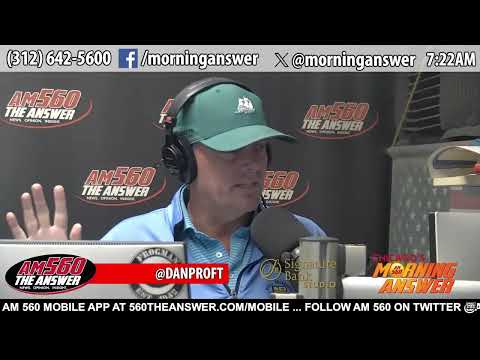
In his Chicago’s Morning Answer radio program, Dan Proft explores the problem of government-sponsored gambling:
Illinois’ embrace of video gambling has been dramatic: from fewer than 8,000 VGTs in FY 2013 to nearly 50,000 by FY 2025. Here is the breakdown:
| 2012: 0 VGTs | 2019: 32,033 VGTs |
| 2013: 7,920 VGTs | 2020: 36,145 VGTs |
| 2014:17,467 VGTs | 2021: 40,157 VGTs |
| 2015:20,730 VGTs | 2022: 43,128 VGTs |
| 2016:23,891 VGTs | 2023: 45,987 VGTs |
| 2017: 26,873 VGTs | 2024: 48,176 VGTs |
| 2018:29,283 VGTs | 2025: 49,282VGTs |
The explosion of slot machines across Illinois has not improved the state’s budget condition, nor has it produced meaningful economic stability. What it has produced is more victims.
As gambling access has expanded, so has evidence of harm. Calls to the Illinois Gambling Helpline have surged, reflecting the predictable consequences of state-sanctioned gambling.
In June 2022, the Illinois Department of Human Services published a statewide assessment estimating that 3.8 percent of adult Illinoisans—approximately 383,000 people—already suffer from a gambling problem, with another 7.7 percent considered at risk. That represents a vast population vulnerable to addiction and financial ruin, precisely the group from which gambling revenues are disproportionately drawn.
When the state expands access to gambling, it knowingly increases the pool of people harmed by addiction, financial ruin, and false hope. That is not an accident of policy — it is the predictable outcome.