Our enemies have waged a hybrid war against us for years, using drugs, criminal networks, mass illegal migration, and political subversion as weapons. Too many of our political classes deny this reality, pretending instead that these actions are nothing more than lawlessness or the result of desperate humanitarian crises.
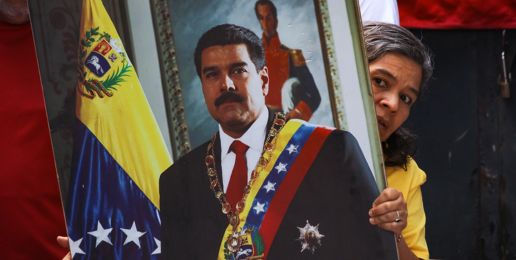
The capture of Nicolás Maduro exposes what has really been going on for decades.
It is the first serious strike against a key forward operating base in this hybrid war. It sends a message that the United States is no longer willing to ignore the actions of hostile regimes, from Caracas to Beijing to Moscow to Tehran.
For years, Venezuela under Chávez and Maduro served as a launching pad in our own hemisphere, used by an array of enemies to attack us through hybrid warfare tactics. Until last Saturday, Venezuela was an active staging area for Cuba, Iran, Russia, China, and transnational criminal gangs, whose activities, directly or indirectly, targeted the United States.
On January 3, 2026, as part of “Operation Absolute Resolve,” U.S. special operations forces and CIA teams penetrated Caracas under heavy electronic and kinetic warfare cover, dismantled key elements of Venezuela’s Russian- and Chinese-supplied air defenses, and extracted Nicolás Maduro and his wife from what he believed was an impregnable fortress.
Within hours, Maduro was in U.S. custody in New York, and President Trump told the world that the United States was now “in charge” of Venezuela.
Although the raid was conducted as a law enforcement action, it was more than that. It was intended to rip out a central node of an enemy network.
Venezuela had become a sanctuary and an operating hub where:
- Cuban intelligence officers became part of Venezuela’s intelligence service, and Cuban military personnel took over the President’s personal security detail.
- Iran, through its proxy Hezbollah, ran terror-financing, money-laundering, and drug networks.
- Russia and China embedded advanced air defense systems.
- Regional gangs such as Cartel de los Soles and Tren de Aragua used Venezuelan territory as an operating base, protected by Venezuelan soldiers, to ship drugs to the U.S., Canada, and other countries.
The regime used oil to secure the involvement of a variety of foreign actors—shipping heavily subsidized crude to Cuba, servicing Chinese loans with oil barrels, and collaborating with Russia and Iran in a sanctions-busting “shadow fleet” that kept money flowing to an anti-American axis.
Taking Maduro off the chessboard directly disrupts it all.
Venezuela is just the visible tip of a huge iceberg. The hybrid assault on the United States runs through a regional web that includes Colombia, Mexico, and other Latin American governments, by design or weakness, that have become part of the threat against us.
Colombia has been both an ally and a battleground. Fuerzas Armadas Revolucionarias de Colombia—Revolutionary Armed Forces of Colombia (FARC) dissidents and Ejército de Liberación Nacional—National Liberation Army (ELN) guerrillas did not disappear; they adapted, merging with Venezuelan elements and transnational criminal organizations to control cocaine production, illegal mining, and trafficking routes.
Iranian and Hezbollah networks exploited the porous Venezuela–Colombia border, using long-standing smuggling corridors to move drugs, gold, and cash into the global financial network that bankrolls both terrorism and the survival of the Caracas regime.
At the northern end of this web sits Mexico. U.S. threat assessments are direct: Mexican cartels are the principal drivers of synthetic opioids entering the United States, and the same organizations facilitated nearly three million illegal migrant arrivals at the southern border in 2024 alone.
This is not random “migration;” it is a business and a weapon.
The cartels operate a continental pipeline that starts in Colombia, passes through Venezuelan ports and airstrips, and ends in American towns—delivering drugs, criminals, and migrants that strain every institution we have, from border patrol to public schools.
These are the activities that make Venezuela valuable to hostile powers. Seizing the hub in Caracas does not magically solve the problem—but it deprives Russia, China, Iran, Cuba, and the cartels of one of their safest and most strategically located bases.
One of the most powerful tools in this hybrid war has been mass illegal migration. Over the four years before this administration, hostile states and their criminal partners used migrant caravans to generate crushing pressure on America’s border, social services, law enforcement, and political system.
Cartels and smuggling networks turned the illegal movement of human beings into an instrument of war—advertising routes on social media, orchestrating mass crossings to overwhelm specific sectors, and concealing criminals, gang members, and potential foreign operatives within migrant groups.
U.S. homeland assessments link these criminal organizations to nearly three million illegal arrivals in 2024 and to record drug deaths driven by fentanyl and other synthetic opioids.
But external pressure only works if it is welcomed and normalized within our government. That is precisely what happened under the previous administration. Instead of treating this as a national security crisis and a hostile tool of foreign powers, Washington’s leadership embraced an ideological narrative that:
- Framed enforcement as cruelty and open borders as compassion.
- Encouraged a mass influx with near‑guaranteed release into the interior.
- Promoted the idea that assimilation is optional or even oppressive, fostering ethnic and ideological enclaves that resist integration into American civic culture.
Foreign actors—from cartels to state intelligence services—saw this clearly. Their goal was not merely to move bodies but to reshape the American political and cultural landscape. The objective was to:
- Overload our systems so that enforcement and adjudication become functionally impossible.
- Create permanent domestic constituencies that oppose enforcement and demand increasingly permissive policies.
- Foster a climate in which refusal to assimilate is tolerated, even celebrated, making cohesive national identity harder to maintain and easier to attack.
In other words, mass illegal migration was both a weapon and a Trojan horse. The previous administration opened the gates, and our enemies walked through them.
China’s approach aligns closely with the classical model of winning without battle. Through Venezuela, Beijing bought leverage with barrels rather than bullets. China purchased the bulk of Venezuela’s modest oil exports, turning Caracas into one of its most dependent clients in the hemisphere. That oil was less critical to China’s energy security than to its geopolitical foothold. For Venezuela, the relationship was existential; for China, it was positioning.
China also embedded itself in Venezuela’s military. State-owned firms supplied long-range early-warning and so-called anti-stealth radars (JY-27, JYL-1) and integrated command-and-control systems that were part of Venezuela’s air-defense network, alongside Russian surface-to-air missiles.
These systems were designed to complicate any U.S. operation, such as the one that just toppled Maduro. The fact that they were jammed and neutralized so quickly sends a powerful secondary message: Chinese systems are no match for the U.S. military.
Within and around the United States, China’s hybrid campaign has several prongs:
- Land and infrastructure: PRC-linked entities have purchased land and businesses near sensitive U.S. military facilities, reportedly including property adjacent to Whiteman Air Force Base, home of the 509th Bomb Wing, the only operational B-2 Spirit stealth bomber wing in the U.S. Air Force arsenal.
- Drug and financial networks: Chinese intermediaries supply key fentanyl precursors and launder proceeds through shell companies, exploiting weak corporate transparency to directly fuel America’s overdose crisis and enrich actors linked to a hostile state.
- Political influence: United front groups, front organizations, covert donations, and media partnerships are used to mute criticism of Beijing, shape debates on immigration and law enforcement, and exacerbate American divisions when doing so serves Chinese interests.
This is not an academic “competition” with China; it is an ongoing assault on American sovereignty.
Russia’s presence in Venezuela was not symbolic. Moscow supplied S-300VM and Buk-M2E air-defense systems, Igla-S MANPADS, and advisors who embedded Russian doctrine and technology in the Western Hemisphere. These were marketed as the shield that would prevent exactly the type of U.S. strike that just captured Maduro. Their failure hurts Russia’s prestige and exposes limitations in the export versions of its systems.
Economically, Russian companies and shadow-fleet operations helped move Venezuelan crude in defiance of sanctions and provided diluents and services that allowed Caracas to keep pumping. That cooperation secured Moscow influence, revenue, and another lever against U.S. energy and sanctions policies.
Globally, Russia continues to wage a shadow war against the United States across multiple fronts:
- Cyber operations against our critical infrastructure and government systems.
- Disinformation campaigns aimed at our elections, racial tensions, and protest movements.
- Covert influence and support that amplify both far-right and far-left agitation.
Venezuela was one of the few places where Russia could physically affect the Western Hemisphere’s security architecture. Removing Maduro makes that presence more costly and less sustainable.
For Iran and Hezbollah, Venezuela was a dream platform: a friendly regime, deep corruption, access to ports and minerals, and a direct path into the U.S. A 20-year partnership enabled Iran to supply drones, technicians, and sanctions-busting expertise while receiving oil, gold, and political cover.
Hezbollah-linked networks in Venezuela and the wider region used front companies and diaspora communities to operate:
- Money‑laundering operations.
- Drug‑trafficking networks.
- Logistics and procurement for their global activities.
Congressional testimony has been crystal clear: these networks are not merely local crime; they are part of a global terror apparatus that can be directed against the U.S. homeland when the moment suits Tehran. At the same time, Iranian actors have posed online as American activists, encouraging protests and political violence as a cheap way to deepen our internal divisions.
Capturing Maduro and forcing a restructuring of the Venezuelan state makes Iran’s Western Hemisphere project more fragile and vulnerable.
From the perspective of hybrid warfare, the Maduro capture achieves several objectives at once:
- Decapitates a key host state: The regime most willing to host hostile powers and criminal networks in our hemisphere has lost its leader and much of its air defense credibility.
- Disrupts a logistics hub: Oil deals, sanctions-evasion schemes, gang trafficking networks, and terror-finance pipelines.
- Signals a new doctrine: For decades, hostile regimes bet they could attack the United States indirectly—through drugs, migration, gangs, proxy forces, and information operations—without paying a direct personal cost. Maduro’s appearance in a U.S. courtroom is a blunt rebuttal to that assumption.
Most importantly, it reframes the problem correctly. Mass illegal migration, mountains of drugs, criminal gangs, foreign influence in protests, oil and financial pipelines, and hostile basing in our hemisphere—all of these are not isolated “issues.” They are waging war by other means.
Venezuela was the most obvious staging ground. Taking Maduro out of the picture is a start, not an end. It buys time. It rattles the confidence of elites in Havana, Tehran, Moscow, and Beijing who thought distance and deniability would insulate them.
If followed through, it can mark the moment when the United States stopped pretending this was just politics and acknowledged it for what it is: a hybrid war already underway that we finally chose to fight.
Our enemies are not at the gates.
They have already come through them.