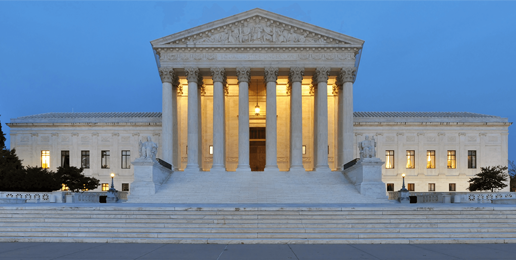
The Supreme Court of the United States (SCOTUS) is considering several pivotal cases affecting our freedom to live out our faith and the God-given rights of parents. Let us pray that the Justices will seek wisdom from Almighty God and have the courage to uphold the original intent of the U.S. Constitution.
Illinois Family Institute has filed friend-of-the-court briefs in many of the cases addressing these hot-button issues. Some of the cases below have been accepted for review, with decisions generally expected by the end of June 2027. Others await a decision on whether the Court will hear them. Here are nine cases to watch—and what they could mean for the future of our civil liberties.
International Partners for Ethical Care v. Ferguson
Several parents are challenging Washington state laws concerning runaway minors seeking gender-related treatment. The parents argue that these laws allow officials to withhold a child’s location, facilitate treatment without parental notice or consent, and delay family reunification when parents object to their child’s asserted gender identity.
The Ninth Circuit ruled that the parents lacked standing—the legal basis required to bring their lawsuit. Their attorneys argue that the laws already interfere with family relationships and parenting decisions, and that parents should not have to wait until a child runs away or seeks treatment before challenging them.
“The goal of the state should be reunification of families, not the separation of children from their parents,” said Gene Schaerr, managing partner at Schaerr/Jaffe. “When governments usurp the essential role of loving parents in the lives of their children, tragedy is inevitable.”
“Parents should not have to wait until their children are irreparably harmed to seek protection from courts,” said Ryan Gardner, Senior Counsel at First Liberty Institute. “No family should face the terror of having their children run away to the state and then have those children hidden from them. We hope the Supreme Court will stand up for parents who desperately want to protect their children.”
The immediate question for the U.S. Supreme Court is whether the parents can proceed with their lawsuit, rather than a final determination of whether the laws are constitutional. Oral argument is scheduled for December 7, 2026. The parents are asking the Court to reverse the Ninth Circuit and allow their challenge to move forward.
The Court is expected to issue a ruling by the end of June 2027.
Grand v. City of University Heights
Daniel Grand, an Orthodox Jew in University Heights, Ohio, invited about a dozen friends to pray in his home. Before the gathering occurred, city officials ordered him to stop unless he obtained a special-use permit for religious assembly.
Grand canceled the gathering and applied for a permit. He alleges that officials also subjected him to surveillance, property-enforcement harassment, and financial penalties. Alliance Defending Freedom (ADF) argues that the city singled out religious gatherings while allowing comparable secular gatherings, such as book clubs and poker nights.
“No American needs a permit to pray. When government officials require a permit to host a prayer gathering in one’s home, courts must hold those individuals accountable immediately,” said ADF Senior Counsel and Vice President of Appellate Advocacy John Bursch. “The city’s actions here underscore a troubling trend of weaponizing zoning laws against people of faith while allowing other gatherings of the same size, like book clubs or poker nights, to meet without issue. We are urging the Supreme Court to uphold Mr. Grand’s right to vindicate his First Amendment freedoms.”
The immediate legal question is whether Grand can challenge the city’s actions without first completing its permitting process. Lower federal courts dismissed his lawsuit because he had not finished that process. The U.S. Department of Justice, 14 states, and 51 members of Congress support his case; the federal government argues that completing the process was unnecessary before suing.
The SCOTUS has agreed to hear the case, with oral argument scheduled for December 9, 2026, according to the release. Grand is asking the Court to allow his religious-freedom lawsuit to proceed.
St. Mary Catholic Parish v. Roy
A group of Catholic parents and preschools from Colorado are fighting to stop their state from excluding them from the state’s “universal” preschool program (UPK) because of their faith.
When Colorado created its “universal” preschool program, it promised every Colorado family 15 hours of free preschool per week at the public or private preschool of their choice, a benefit worth about $6,000 per child. But Colorado imposed restrictions that excluded all the Archdiocese of Denver’s preschools from the program because they ask families to be supportive of the Catholic faith. As a result, families like Dan and Lisa Sheley, who are represented by Becket, have been forced to pay thousands out of pocket for Catholic preschool. Becket reports that, since UPK began, enrollment at archdiocesan preschools has fallen 20 percent and two schools have closed.
The Sheleys and Catholic parish preschools have been fighting this religious discrimination in federal court since 2023. In 2025, the Tenth Circuit sided with Colorado. The families argue that this exclusion conflicts with the U.S. Supreme Court’s religious-liberty decisions in Carson, Espinoza, and Trinity Lutheran. The Justices will now consider whether Colorado’s participation requirements unlawfully exclude Catholic schools and families from a program it promised would serve everyone.
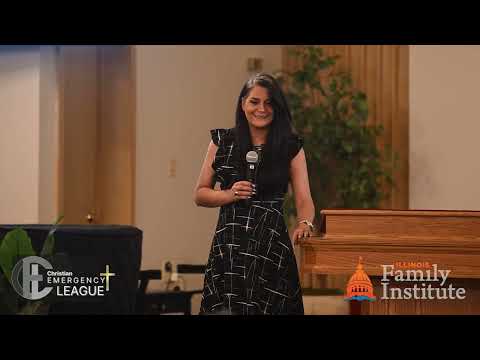
Oral argument is scheduled for November 3, 2026, with a decision expected by the end of June 2027. Learn more by watching this 5-minute video.
Missionaries of Saint John the Baptist, Inc. v. Frederic
The Missionaries of Saint John the Baptist want to build a small grotto—a Catholic shrine for prayer and reflection—on property next to their church in Park Hills, Kentucky. The church has occupied the property for nearly a century, predating the city’s zoning ordinance.
Local zoning officials approved the project in April 2021, but two neighboring property owners challenged that approval. The trial court rejected their objections; however, the Kentucky Court of Appeals reversed, and the Kentucky Supreme Court upheld that ruling in December 2025.
The Court agreed to consider whether preventing a religious institution from building a religious structure on its own property imposes a “substantial burden” under the Religious Land Use and Institutionalized Persons Act, known as RLUIPA. The church’s attorneys argue that blocking the shrine violates that protection. Although their petition also raised unequal treatment, the Court limited its review to the substantial-burden question.
“Telling a church it can’t build a modest place for prayer and reflection on its own property is outrageous,” said Kelly Shackelford, President, CEO, and Chief Counsel at First Liberty. “Federal law provides clear protections for how faith-based organizations can use their property to support their mission. This is an important case for religious freedom.”
The U.S. Supreme Court has agreed to hear the case but has not yet scheduled oral argument.
Olympus Spa v. Armstrong
Olympus Spa, a Christian family-owned Korean spa in Washington state, is challenging a requirement to admit a biological male who identifies as a woman into its communal nude facilities. The owners say their female-only policy reflects Korean bathing traditions, protects patrons’ privacy, and follows their Christian beliefs against mixed-sex nudity outside marriage.
After a complaint in 2020, the Washington State Human Rights Commission determined that the policy violated the state’s prohibition on gender-identity discrimination. According to ADF, the commission threatened to refer the matter for prosecution unless the spa changed its policy.
“It is an abuse and perversion of the public accommodation laws to give biological males access to the intimate spaces of unconsenting females in a state of full or partial undress. No woman or girl should have to give up her right to bodily privacy and safety to avoid offending a man. That’s wrong, and it puts women and girls in harm’s way,” said Pacific Justice Institute (PJI) Chief Counsel Kevin Snider.
“Based on a single complaint by a male who may never even have visited the spa, Washington state decided its views on gender identity must override a centuries-old cultural practice and deep religious conviction, turning its enforcement power against a Korean family’s small business,” said ADF Senior Counsel and Vice President of Appellate Advocacy John Bursch. “The Lee family was living the American dream while staying true to their Korean heritage and Christian values. Now, the state is turning their lives into a nightmare, insisting they compromise not only their deeply held religious beliefs but also the privacy and safety of women and girls as young as 13 who visit the spa. The First Amendment forbids all that, which is why we’re urging the U.S. Supreme Court to hear the Lee family’s case.”
The central dispute is whether enforcing that nondiscrimination requirement violates the owners’ First Amendment rights. “A family of Christian immigrants—who fled Korea hoping for greater religious freedom—now stand to lose their livelihood or the ability to practice their faith because the State of Washington insists on dictating that males who identify as women be admitted into a female-only nude spa,” the petition filed with the SCOTUS in Olympus Spa v. Armstrong explains.
The Ninth Circuit upheld dismissal of the spa’s lawsuit, rejecting its constitutional challenge. Attorneys with Pacific Justice Institute and ADF have asked the U.S. Supreme Court to review the case. The petition for certiorari—a request for Supreme Court review—is pending.
Miller v. McDonald
Several Amish individuals and schools are challenging New York’s requirement that children receive vaccinations to attend their private Amish schools, despite their religious objections. New York eliminated its religious exemption in 2019 and brought enforcement proceedings against the Amish challengers in 2022, imposing what their attorneys describe as severe penalties.
The Amish lost in federal district court and the Second Circuit. In 2025, the Supreme Court sent the case back for reconsideration in light of Mahmoud v. Taylor, a decision protecting parents’ religious rights in education. The Second Circuit concluded that decision did not change the outcome and reaffirmed its ruling. (Read more HERE and HERE.)
“The Amish desire to be left alone and practice their religion in peace, as they have done for nearly two centuries in New York,” said Aaron Siri, Managing Partner of Siri & Glimstad. “If New York wins, the Amish will be forced to flee the state.”
“The Amish community in New York wants to be left alone to live out their faith just like they have for 200 years,” said Hiram Sasser, Executive General Counsel for First Liberty.
The central issue is whether applying the vaccination requirement to these Amish schools violates the free exercise of religion. Their attorneys argue that the requirement forces families to choose between their religious convictions and remaining in New York. They have again asked the SCOTUS to intervene. Their renewed petition for review is pending.
Woolard v. Thurmond
Three California families are challenging restrictions in charter-school programs that support parents teaching their children at home. These programs provide public funds for curriculum, educational materials, and extracurricular activities, but exclude religious materials.
The families say the restrictions extend beyond how public money is spent. According to First Liberty press release, participating parents cannot use religious curricula even when purchased with their own money, and children’s work samples are rejected for religious content or connections to religious publishers. First Liberty reports that one family was expelled from its charter school for choosing a religious curriculum.
The families argue that these policies violate religious freedom and freedom of speech by excluding religious choices and viewpoints. The district court dismissed their lawsuit, the Ninth Circuit upheld that decision, and a request for reconsideration by a larger panel was denied.
“The Ninth Circuit declared the homes of these parents to be ‘public school programs’ in order to justify the state’s religious discrimination,” said Hiram Sasser, Executive General Counsel for First Liberty Institute. “Parents should not be punished for choosing quality religious curriculum meeting the state’s standard that they teach to their own children in their own home just because it’s religious.”
“Excluding parents from educational opportunities for their children solely because of religion isn’t just a textbook constitutional violation,” said Allyson Ho, co-chair of the Appellate and Constitutional Law Practice Group at Gibson, Dunn & Crutcher LLP. “It’s a real-world harm that falls most heavily on those least able to bear it like low-income parents, children with disabilities, and military families.”
“Every other parent in these programs gets to choose an academically appropriate curriculum with which to teach their own children,” stated Nicole Bronnimann, Senior Associate at King & Spalding. “California must allow our clients the option to use academically appropriate faith-based curricula that meet their needs.”
The families have asked the Supreme Court to review the case. Their petition for certiorari is pending. The central dispute concerns whether these home-based programs may require secular instruction as public-school programs or whether that unlawfully excludes families from educational benefits because of religion.
Perez v. City of San Antonio
Two ceremonial leaders of the Lipan Native American Church—Gary Perez and Matilde Torres—are challenging San Antonio’s redevelopment plans for Brackenridge Park, where their religious practices depend on a particular riverbend, heritage trees, and nesting birds. They argue that removing trees and driving away birds would destroy the site’s religious function, and that less destructive alternatives are available.
The central issue is whether government can alter a sacred site while dismissing worshippers’ belief that they cannot practice their religion elsewhere. Their attorneys argue that courts and officials cannot substitute their own judgments about religious doctrine for the worshippers’ sincerely held beliefs.
“San Antonio can redevelop the area without bulldozing a centuries-old native American religious site,” stated Stephanie Taub, Senior Counsel for First Liberty Institute. “The Lipan church relies on the unique spiritual ecology of the ancient riverbend. The city telling them they can ‘just go worship elsewhere’ is nothing short of the government redefining their religious beliefs.”
“Bulldozing a religious site is the definition of burdening religious practice,” said Professor Steven T. Collis, director of the UT Law and Religion Clinic. “Both the courts and the city are aware that our clients can worship nowhere else but this site, yet both have told them they are mistaken in their religious beliefs and can just go somewhere else. That violates the Religion Clauses of the First Amendment, as does refusing to do available, less-destructive alternatives.”
First Liberty and the University of Texas Law and Religion Clinic have asked the Supreme Court to review the case. Their petition for certiorari is pending.
Hershey v. City of Bossier City
Richard Hershey was distributing Christian vegetarian literature on a public sidewalk near an arena in Bossier City, Louisiana. He alleges that police and security officers threatened him with arrest and ordered him to leave the public park and never return—even though there was no written policy or application requirement for distributing leaflets there.
Hershey sued the five officers involved, alleging violations of his First Amendment rights. The trial court granted the police officers qualified immunity, shielding them from damages liability, and the Fifth Circuit upheld that decision.
First Liberty and Clement & Murphy then asked the Supreme Court to review and reverse the ruling. Their argument is that officials should be held accountable for obvious constitutional violations even without an earlier case involving nearly identical circumstances. The central issue is whether qualified immunity prevents Hershey from obtaining a remedy for the alleged suppression of his religious speech.
“If people cannot realistically sue when their First Amendment rights are violated, those rights lose meaning. A right without a remedy is effectively unenforceable,” stated Executive General Counsel for First Liberty Institute, Hiram Sasser. “Some violations of the First Amendment are so obviously egregious that government officials should know better and be held accountable.”
Their petition for certiorari is pending.